For orthopaedic practices, injury prevention is becoming an increasingly important part of musculoskeletal care. Patients are not only looking for treatment after an injury occurs. They also want to understand how they move, how to improve their physical performance, and what they can do to reduce the risk of future problems.
That's where AI-powered movement analysis can play an important role.
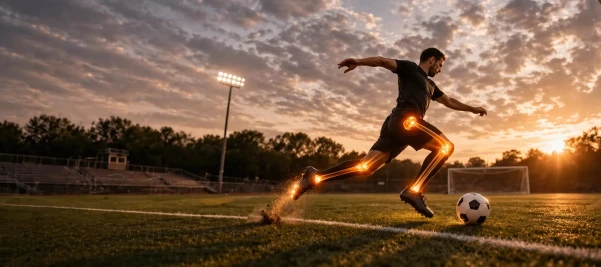
Modern movement analysis combines artificial intelligence, computer vision, and 3D motion capture to evaluate how a person moves and identify patterns that may not be obvious during a traditional visual assessment. Research into AI and sports biomechanics shows growing potential for using these technologies to support performance analysis, movement assessment, and injury prevention, although researchers continue to identify important limitations around validation and clinical implementation.
For orthopaedic doctors and MSK practices, this technology creates an opportunity to move beyond treating injuries and toward a more proactive approach to musculoskeletal health.
What Is AI-Powered Movement Analysis?
AI-powered movement analysis uses cameras and computer-vision technology to evaluate movement without requiring traditional reflective markers or wearable sensors.
Pronesis uses AI-powered, markerless 3D motion capture to analyze movement quality, mobility, balance, flexibility, posture, and other biomechanical characteristics. The Pronesis platform reports that its screening process evaluates 55 data points and can identify more than 250 movement compensations.
The process is designed to be simple. A person completes a guided movement assessment in front of a camera. The system analyzes the movement and generates data that can be used to identify areas for improvement and develop personalized exercise recommendations.
For a busy orthopaedic practice, the ability to obtain objective movement information without a complicated setup can be particularly useful.
How Can AI Movement Analysis Help Identify Injury Risk?
Many musculoskeletal injuries are influenced by multiple factors, including movement mechanics, strength, mobility, balance, previous injury, training demands, and fatigue.
A traditional physical assessment remains essential, but some movement patterns can be difficult to consistently identify through visual observation alone. AI-assisted movement analysis can provide another source of objective information.
Pronesis is designed to identify movement inefficiencies, asymmetries, joint restrictions, balance issues, and other potential risk factors. Its Functional Planar Mapping capabilities can also be used to assess performance deficits, functional fatigue, joint dysfunction, and rehabilitation progress.
For orthopedic practices, there is a practical opportunity is using movement data as another piece of information that can support clinical decision-making and preventive strategies.
How Can Movement Analysis Improve Athletic Performance?
Performance is not only about strength. It also depends on how efficiently a person moves.
An athlete may have excellent strength but still demonstrate limitations in mobility, balance, coordination, or movement mechanics. Identifying these issues can help trainers, therapists, and clinicians develop more targeted programs.
Pronesis was developed to analyze strengths, weaknesses, and areas for improvement and use those findings to create individualized exercise programs. The platform is designed for athletes, trainers, gyms, and other organizations looking to optimize movement and performance.
For an orthopaedic practice, this creates an opportunity to extend care beyond the treatment room.
A patient recovering from a knee injury, for example, may benefit from repeated movement assessments during rehabilitation. Instead of relying solely on how the patient feels or a single assessment, clinicians can use objective measurements to help monitor changes over time.
Can AI Movement Analysis Help People Build Strength?
Strength training is most effective when exercises are appropriate for the individual.
A generic exercise program may not address a person's specific movement limitations. AI-assisted movement screening can help identify areas where mobility, balance, stability, or movement quality may need additional attention.
Pronesis uses movement-screening data to generate personalized exercise programs designed around an individual's biomechanics and goals. These programs can be used to complement personal training or rehabilitation programs.
This can be especially relevant for older adults. Pronesis includes gait and balance screening designed to help identify potential fall risks and support personalized programs focused on mobility, balance, and strength.
For orthopaedic practices, this expands the conversation from treating a fracture, joint replacement, or injury to helping patients maintain strength and function after treatment.
What Should Orthopaedic Practices Consider Before Implementing AI Movement Analysis?
AI should support clinical expertise, not replace it. Practices considering movement analysis should look at several factors, including data security, patient privacy, clinical workflow, staff training, measurement validity, and how the resulting information will actually be used.
The most useful approach may be to treat AI movement analysis as an additional source of objective information that helps clinicians and rehabilitation professionals make better-informed decisions.